
A shingle is on the lawn. Or a stain has appeared on the ceiling, small and brown, and you are not sure whether to worry yet. You want a straight answer, what is wrong, what it will take to fix it, and whether a repair is enough or the roof is telling you something bigger. The direct answer is that most roof repair in Dallas fixes a specific failed part, flashing, a pipe boot, a valley, or a patch of shingles, and a good repair starts by finding that exact part, not by sealing everything in sight.
A roof problem feels worrying because the roof is the one part of the house you cannot see properly from the ground, and every rain makes you wonder if the damage is spreading while you wait.
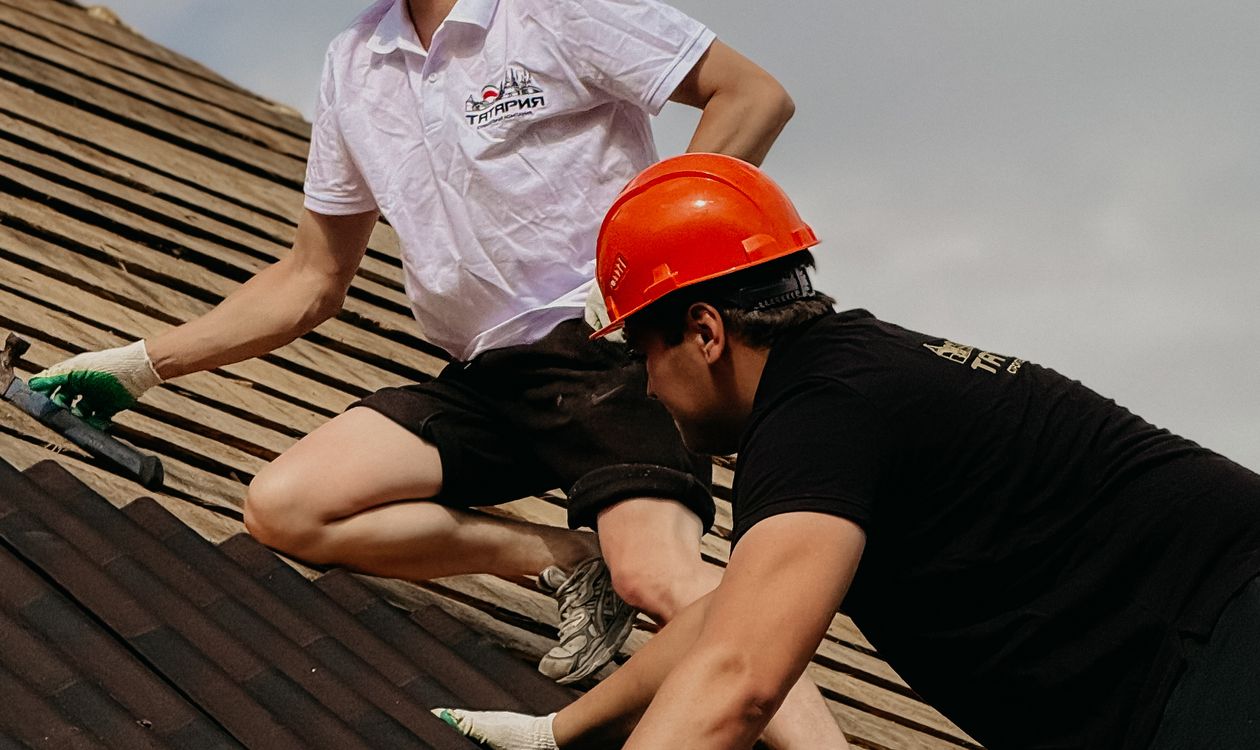
This photo shows two roofers at work in safety gear. It is the closest real photo available, not a Dallas repair job.
What Roof Repair in Dallas Usually Means
Roof repair means fixing the failed part of a roof that is otherwise sound. It is not a new roof, and it is not a coat of sealant spread over the whole surface. A repair replaces a cracked pipe boot, reseals or replaces a section of flashing, replaces a handful of damaged shingles, clears and repairs a valley, or fixes a skylight seal, and then the roof goes back to shedding water the way it was built to.
Dallas roofs fail in a particular pattern, because the weather here works on them in two ways at once. Summer heat bakes sealants, dries rubber pipe boots, and makes flashing joints expand and contract day after day. Then hail season arrives, typically May to September, and a hard storm can bruise shingles, dent flashing, and split a pipe boot in a single afternoon. The Dallas Fort Worth area recorded 2,015 hail reports over a recent 10 year period tracked by NOAA, with 283 of them at 2 inches or larger, and $6.1 billion in reported property damage. In April 2026, baseball size hail fell across Dallas, Tarrant, Collin and Denton counties, followed by more storms in May. A roof that was fine in spring can need a repair by summer, and that is normal here, not a sign the roof was badly built. Knowing what usually breaks is the first step, so here are the repairs Dallas roofers do most often.
The Repairs Dallas Roofers Do Most Often
Flashing repair is the most common roof repair in Dallas. Flashing is the metal that seals the joints where the roof meets a wall, a chimney, a vent, or a skylight, and when it fails, water runs straight into the house. Dallas heat moves the metal, hail dents it, and the sealant around it ages and cracks, so flashing joints are the first place a good roofer checks on any repair call. Our guide to roof flashing repair in Dallas covers the signs in detail, and the short version is that any joint on your roof is a place water can get in if the flashing is not sound.
Pipe boot replacement is the second most common repair, and it is often the cheapest. A pipe boot is the rubber collar that seals around a plumbing vent pipe where it passes through the roof, and Dallas sun destroys the rubber over time. A cracked pipe boot lets water run straight down the pipe and into the house, and the stain often appears in a bathroom or a hallway below. Replacing a pipe boot is quick work, and it is one of the best value repairs on a Dallas roof, because a small cracked collar can cause a large stain if it is left alone.
Shingle repair comes third. Shingles fail when they lose granules, when they crack from heat and age, when they lift in wind, and when hail bruises them. A bruised shingle can look fine from the ground and still let water through, because the hail has broken the mat underneath the surface. Shingle repair means replacing the damaged shingles, not patching over them, and the new shingles should match the existing ones in type and colour as closely as possible. If the exact shingle is no longer made, an honest roofer will say so, because a close match is better than a surprise.
Valley repair is the fourth common job. A valley is where two roof slopes meet, and it carries more water than any other part of the roof in a hard rain. If the valley flashing is damaged, or if debris has built up in the valley and is holding water, the leak will show up where the valley runs inside. Valley repair means new flashing and clear water flow, not a patch laid over debris. Skylight resealing is the fifth, because a skylight is a hole in the roof with a seal around it, and that seal ages, cracks, and lets water in. Chimney flashing repair is the sixth, and it is one of the most often missed, because the flashing around a chimney has several pieces that must overlap correctly, and one failed piece lets water in behind the others. These are the usual suspects, but a repair is only as good as the diagnosis behind it, so the next question is how a pro decides what to fix.
How a Pro Decides What to Fix
A good roof repair starts with an inspection, not with a bucket of sealant. The pro walks the whole roof, checks the flashing at every wall and penetration first, then the pipe boots, then the valleys, then the field of shingles. They look for soft spots underfoot, because a soft deck tells them water has been getting in for a while, even if the stain inside is small. They check the attic too, looking for damp insulation, stained decking, and daylight coming through, which all point to the entry point. If you want to understand the search before the pro arrives, our guide on how to find a roof leak in Dallas explains the signs to look for inside the house.
Finding the cause is the hard part, and an honest pro will tell you that. Water enters at one place and shows up at another, so the pro traces the path, checks the most likely spots first, and tests with water only when it is safe to do so. A pro who promises to find any problem in ten minutes is guessing, and guessing with your roof is expensive. Sometimes the pro will need to lift shingles around a suspect area to see what is underneath, and that is normal. The roof has to be opened to be properly checked, and a pro who refuses to look underneath is not really inspecting. Once the cause is found, the repair itself follows a pattern, and knowing that pattern helps you judge the work, which is what the next section covers.
What a Good Repair Looks Like
A lasting repair fixes the cause, not the symptom. A failed pipe boot gets replaced, not smeared with sealant. Failed flashing gets replaced with new metal that overlaps correctly, not just sealed over the old piece. A damaged valley gets new flashing and clear water flow, not a patch on top of debris. Shingles around the repair get replaced with matching shingles, sealed properly, so the repair blends into the roof and sheds water the way the roof was designed to.
Sealant alone is a temporary fix on a joint that moves with heat. Dallas temperature swings work on every joint on your roof, and sealant that looks good in spring can crack by late summer. That is why a repair that is only sealant will often leak again within a year, and why a good roofer replaces the failed part instead. After the repair, the roof should be checked again in the next rain, and you should ask what was done, what was found, and what to watch next. A written note of the work, with photos, is worth asking for, because it helps the next roofer who looks at the roof and it helps an insurance claim if one follows. A repair done this way can last for years, but not every roof is worth repairing, so here is how to tell when repair stops making sense.
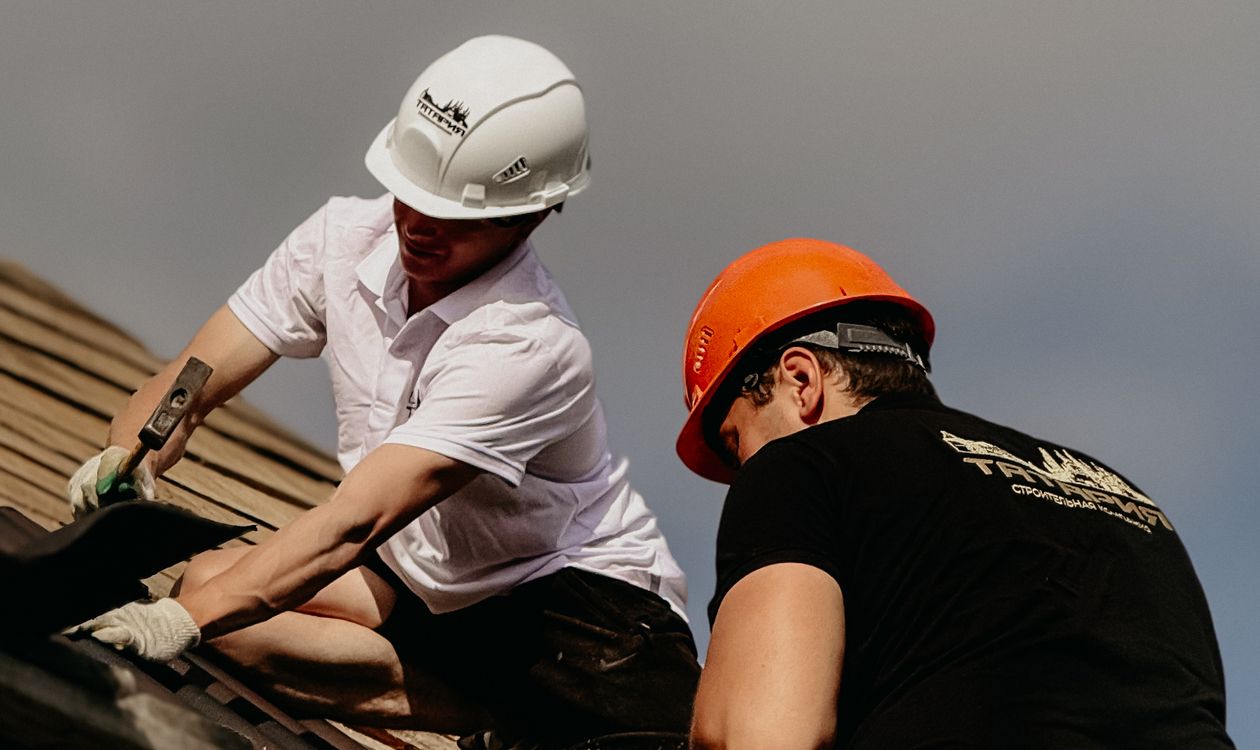
This photo shows roof construction workers at work on a building site. It is the closest real photo available, not a Dallas repair job.
When Repair Is Enough, and When It Is Not
Repair is enough when the damage is local and the rest of the roof is sound. One failed pipe boot, one section of flashing, a handful of bruised shingles after a storm, a single valley with debris damage, these are repair jobs, and a good repair will last. The roof around the repair should be in good shape, with shingles that still have granules, flashing that is sound elsewhere, and a deck that is dry and firm underfoot.
Replacement starts making sense when the damage is spread across the whole roof. Shingles losing granules everywhere, shingles curling or cracking across several slopes, flashing failing at several joints at once, a deck that is soft in more than one place, or repairs that keep coming back in new spots every year, these are signs the roof as a system is at the end of its life. Our guide to roof repair versus replacement in Dallas walks through the comparison in full, and the honest rule is simple. If the roof needs a repair every year, the repairs are costing more than a replacement would have, and it is time to stop patching. Age matters too. A roof that is near the end of its expected life and has storm damage across several slopes is usually better replaced than repaired in pieces, because each new repair lands on a roof that is getting weaker underneath. Cost is the question that follows every repair decision, so here is what changes it.
What Changes the Cost of Roof Repair in Dallas
There is no single price for roof repair in Dallas, and any guide that gives you one number is guessing. The cost changes with the cause of the problem, the type of roofing, how easy the roof is to reach, and what is found underneath. A pipe boot replacement on an accessible single storey roof costs far less than a chimney flashing replacement on a second storey slope that needs scaffolding, and both cost less than a repair that finds a wet deck underneath.
For scale, the average Dallas roof replacement runs $10,000 to $15,000, with larger homes at $16,000 to $24,000, according to the Wortham Brothers 2026 guide, and the Angi Dallas average is $10,054. Those are replacement figures, not repair figures, but they show why fixing a small problem early matters. A small repair now can be the difference between a repair bill and a full replacement later, because water that keeps coming in rots decking, damages insulation, and spreads to ceilings and walls. Before you agree to a price, it helps to know what a fair quote looks like, so here is what to ask for before any work starts.
What a Fair Quote and a Fair Inspection Should Cover
A good inspection before a repair covers the whole roof, not just the spot above the stain. The inspector checks the flashing, the pipe boots, the valleys, the skylights, and the chimney, then the field of shingles, and then the attic, looking for damp insulation and stained decking. They should tell you the cause in plain words, show you photos of what they found, and explain whether the fix is a small repair or something larger. A roof inspection in Dallas is the best money you can spend on a repair, because a problem that is misdiagnosed gets repaired twice, and the second repair costs more than the first inspection ever would.
Ask the inspector what was found, what will be fixed, what materials will be used, and what the warranty covers, and get it in writing before work starts. A written quote should say what will be done, how large the repair area is, whether the deck is included if it proves wet, and what the warranty covers. A quote that is far below the others usually leaves something out, and that something is often the deck or the flashing. Once the quote is agreed and the work is done, the roof still needs care, because a repaired roof that is ignored will fail again in the same places, and that care is next.
Keeping a Repaired Roof in Good Shape
A roof that has been repaired deserves routine care, and Dallas roofs reward it more than most. Check the roof twice a year, once in spring before hail season and once in autumn after the heat, and check it again after any storm that drops hail or brings strong wind. Each check takes less than an hour from the ground, and it catches the small failures before they become ceiling stains.
Keep the gutters clear, because a blocked gutter sends water back onto the roof and under the shingles, and gutter problems and roof problems feed each other. Keep valleys clear of leaves and debris, because a valley full of debris holds water against the flashing. Keep trees trimmed back so branches do not scrape the shingles in wind, and keep the roof clear of stored items that trap moisture underneath. Limit foot traffic, because every step presses the shingles and dropped tools can crack them.
Finally, keep a simple record. Note the date of each check, what you saw, and what was fixed, with a photo or two. That record helps the next roofer, helps an insurance claim, and helps you decide when repair stops making sense and replacement starts. A roof that is checked, cleared, and kept dry will serve a Dallas home well for years, and the areas we serve across Dallas Fort Worth all face the same heat and the same hail, so the routine is the same wherever you live. Storm damage brings one more question, insurance and Texas rules, so those are last.
Insurance and Texas Rules for Roof Repair
If the damage came from a storm, call your insurer as soon as you find it, and have photos ready. Under Texas law, an insurer must acknowledge a claim within 15 business days, under Insurance Code 542.055. That is a timeline for the insurer to respond, not a promise about what the claim will pay. Keep a record of every call, every email, and every visit, with dates and names, because a clear record makes a claim move faster. Our full guide to a roof insurance claim in Texas walks through the whole process step by step.
Two Texas rules matter for roof repair. A contractor may not waive, rebate, or absorb your insurance deductible, under Insurance Code 707.002, and it is a crime to offer it. If a roofer offers to cover your deductible, that is a warning sign, not a favour. A contractor may also not act as a public adjuster on a job it also repairs, under Insurance Code 4102.163, which keeps the roles separate. Texas issues no state roofing licence, so roofing here is regulated locally through city permits, and Dallas requires a reroof permit for large areas or a full replacement, while small repairs usually do not need one. Your roofer should handle the permit, and you should see it before work starts on anything larger than a patch. A repair done right, with the cause found and fixed, is the cheapest roof work you will ever buy, so the last question is the simplest one, how do you know the repair worked.
Tip: After the next rain, look at the ceiling in the room where the stain appeared and check whether it is dry or still damp. A stain that is still damp two days after rain means water is still getting in, and the repair is not finished yet.
Frequently Asked Questions
How much does roof repair cost in Dallas?
There is no single price, because the cost changes with the cause, the type of roofing, how easy the roof is to reach, and what is found underneath. A pipe boot replacement on an accessible roof costs far less than a chimney flashing replacement on a steep second storey slope. For scale, the average Dallas roof replacement runs $10,000 to $15,000 according to the Wortham Brothers 2026 guide, which shows why fixing a small problem early matters.
How long does a roof repair take?
Most small repairs take a few hours once the cause is found, and the roof should be checked again in the next rain. If the deck underneath is wet or rotted, the repair takes longer, because that section of deck must be replaced before new shingles go on.
Can I repair my roof myself?
Small checks from the ground are fine, but roof work itself is best left to a pro. Roofs are steep, hot, and easy to damage further, and a repair that looks simple from the ground often hides a failed flashing joint or a wet deck underneath. A pro also knows how to match shingles and seal a joint so it lasts through Dallas heat and hail.
Do I need a permit for roof repair in Dallas?
Small repairs usually do not need a permit, while Dallas requires a reroof permit for large areas or a full replacement. Your roofer should handle the permit, and you should see it before work starts on anything larger than a patch.