
Three quotes for the same roof, three prices thousands apart, and a knock on the door from a crew you have never seen before, the day after a hailstorm. Choosing a roofing contractor in Dallas is the hardest part of any roof job, because Texas issues no state roofing licence, so anyone can call themselves a roofer. The direct answer is that a good Dallas roofer is found by checking insurance, local presence, a written scope, references, and manufacturer certification, not by picking the lowest price or the fastest promise.
Handing the biggest job your house will ever need to a stranger is worrying, and it should be, because a roof installed badly will leak for years while the crew that installed it is long gone.
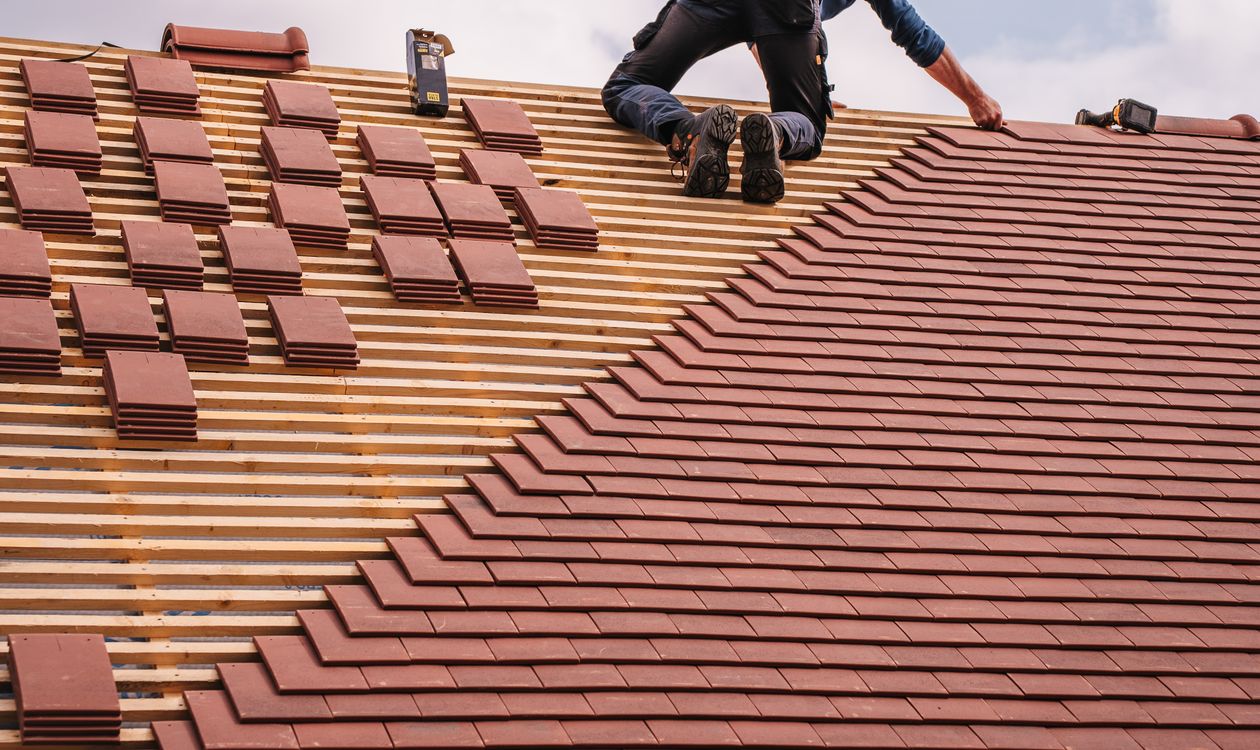
This photo shows a roofer installing shingles on a new roof. It is the closest real photo available, not a Dallas job.
Why Choosing a Dallas Roofer Is Different
In most states, a licence is the first filter. In Texas, there is no filter, because roofing is not on the Texas Department of Licensing and Regulation list of regulated trades, and Texas issues no statewide general building contractor licence either. There is no state exam, no state register, and no minimum job value that triggers one, so there is nothing to look a roofer up on. That is the single most important fact about hiring a roofer in Dallas, and every other check in this guide exists because of it.
The nearest equivalent to a licence is voluntary certification from the Roofing Contractors Association of Texas, known as RCAT. A residential applicant must be a principal in a Texas roofing company for at least two continuous years, the company must have a fixed address, carry insurance or a bond, pass exams, and complete 8 hours of continuing education a year. It is voluntary, so many good roofers do not hold it, but a roofer who does hold it has met a standard somebody independent checked. Individual cities may still require a contractor to register or to pull a permit, so ask about your own city. With no state licence to fall back on, the checks below are how you judge a roofer, so here they are, in the order that matters.
The Checks That Matter Most
Insurance comes first, because it is where the real verification happens in Texas. Ask for a certificate of general liability insurance and workers compensation coverage, and have it sent to you directly by the insurer or agent rather than forwarded by the contractor, and confirm it is current. A roofer without insurance leaves you carrying the risk if a worker is hurt on your roof or if the work damages your home, and that risk is not worth any saving on the quote.
Local presence comes second. Choose a roofing company with a physical office in the Dallas Fort Worth area, a verifiable business history, and staff who will still be here next year. Collect the full legal business name, a physical business address, a phone number that is actually answered, and the name of the person who will be on your roof. Then verify the business the ordinary ways. Check how long it has traded under its current name, that the entity is registered with the Texas Secretary of State, and its complaint record, including under any previous name, because storm chasers routinely re register after a bad season.
References and reviews come third, and in Texas they carry more weight than in states that license roofers. Ask the contractor for references from previous clients, and take the time to read online reviews carefully. Look for patterns rather than single comments, and be wary of a company with only very recent reviews or with reviews that all sound the same. Manufacturer certification is a fourth useful signal. Roofing material makers like GAF, CertainTeed, and Owens Corning run certification programs for contractors who meet their training and quality standards, and certified contractors can offer stronger warranty options on qualifying systems. Credentials do not replace good workmanship, but they are a useful starting point, and a contractor who can show insurance, a local address, references, and certification has passed every check that exists in Texas. The next check is the quote itself, because a good roofer writes down what a bad roofer leaves vague.
What a Written Quote Should Say
Get at least three written quotes, and compare what they include, not just the bottom line. A written quote should say what will be done, how large the roof is, which material and brand will be used, whether tear off and disposal are included, whether the deck is included if it proves wet, what underlayment and flashing will be used, what vents will be installed, and what the warranty covers. A quote that does not name these things is not a quote you can compare, and a roofer who will not put the details in writing is a roofer to avoid.
For scale, the average Dallas roof replacement runs $10,000 to $15,000, with larger homes at $16,000 to $24,000, according to the Wortham Brothers 2026 guide, and the Angi Dallas average is $10,054. Those are published averages, not quotes, and your home will differ. What matters is what your quote includes, because a quote that is far below the others usually leaves something out, and that something is often the deck, the flashing, or the disposal. If the quotes disagree on whether the job is a repair or a replacement, ask each roofer to explain why, because our guide to roof repair versus replacement in Dallas shows how different those two jobs are, and a roofer who cannot explain the difference is guessing. Once the scope is clear, the warranty is the next thing to read, because a roof carries two warranties and they are not the same thing.
This photo shows roof construction workers on a roof against a blue sky. It is the closest real photo available, not a Dallas job.
The Two Warranties, and Why Both Matter
A roof carries two separate warranties, and they are not the same thing. The manufacturer warranty covers the roofing material, and it lasts for the life the maker states for that product. The workmanship warranty covers the installation, and it lasts for whatever the contractor promises, often much shorter. A roof can fail because the material was faulty, or because the installation was faulty, and each warranty covers only its own half, so you need to know what both of them say before you sign.
The strongest protection comes from choosing a manufacturer certified contractor who can offer an extended warranty covering both materials and labor on a qualifying system. Ask every roofer what each warranty covers, how long each one lasts, who honours it if the roofer is gone, and whether it transfers if you sell the house. A roofer who will not put the workmanship warranty in writing is telling you what it is worth. Get it in writing, and keep it with the quote, because a warranty that exists only in conversation will not help you when a leak appears two years later. Warranties matter most after a storm, because that is when the wrong roofer arrives fastest, and that is next.
Storm Chasers and Red Flags
After every big hail event, Dallas fills with out of area crews who sign roofs and leave. The Dallas Fort Worth area recorded 2,015 hail reports over a recent 10 year period tracked by NOAA, with 283 of them at 2 inches or larger, and $6.1 billion in reported property damage. In April 2026, baseball size hail fell across Dallas, Tarrant, Collin and Denton counties, followed by more storms in May. Each of those storms brought a fresh wave of crews from out of town, and the crews that leave before the warranty means anything are the ones to avoid.
Watch for the red flags. A roofer who knocks on your door the day after a storm and pressures you to sign today is selling, not inspecting. A roofer with no local address, no local work you can see, and no references from Dallas homeowners is a roofer you will never find again. A roofer who offers to waive, rebate, or absorb your insurance deductible is breaking Texas law, under Insurance Code 707.002, and it is a crime to offer it. A roofer who offers to act as your public adjuster on a job it also repairs is breaking Texas law too, under Insurance Code 4102.163, which keeps the roles separate. And after a disaster, an out of town contractor may not take a down payment before work starts. Any one of these is a reason to walk away, and a local roofer with a local address and local work you can see is worth more than a low price from a crew you will never find again. If the job follows storm damage, insurance is part of the conversation, so that is next.
Insurance Claims and Your Roofer
If the work follows storm damage, your roofer and your insurer both have a part to play, and the parts are separate. The roofer documents the damage with photos, explains what it found, and gives you a written scope you can share with your carrier. The insurer decides what the policy covers, and a roofing contractor cannot promise claim approval, determine coverage, or waive a deductible. Those are decisions governed by the policy and the insurer, not by the roofer.
Call your insurer as soon as you find storm damage, and have photos ready. Under Texas law, an insurer must acknowledge a claim within 15 business days, under Insurance Code 542.055. That is a timeline for the insurer to respond, not a promise about what the claim will pay. Keep a record of every call, every email, and every visit, with dates and names, because a clear record makes a claim move faster. A good roofer will meet your adjuster on the roof if you want them there, and will give you photos and measurements that support the claim. Our guide to a roof insurance claim in Texas walks through the claim process step by step, and a storm repair deserves the same clear scope in writing. Once the claim and the scope are clear, the last step is the questions you ask before you sign.
Questions to Ask Before You Sign
Before you commit to roofing work, ask who will perform the installation, whether the crew is the roofer own crew or a day labour crew hired for the week, and how the project will be supervised. Ask who pulls the permit, because Dallas requires a reroof permit for large areas or a full replacement, and your roofer should handle it. Ask how the deck will be handled, what happens if the deck is wet, how long the job will take, and how cleanup is handled, including a magnetic sweep for nails at the end of each day.
Ask what the inspection found, whether repair is realistic, what materials and accessories are included, and what the workmanship and manufacturer warranties cover. Ask for photos of recent local work, and check that the crew will be their own, not a crew hired for the week. If the job is urgent because water is coming in, our guide to emergency roof repair in Dallas explains what to do first, and a roofer who cannot answer these questions plainly is a roofer who has not thought the job through. A good roofer answers plainly, in writing, before you sign, and that is the simplest test of all.
Tip: Before you sign, ask the roofer to show you the insurance certificate sent directly by their insurer, not a copy forwarded by the roofer. It takes one phone call to verify, and it is the single check that protects you if anything goes wrong on your roof.
Frequently Asked Questions
Is there a roofing licence in Texas?
No. Texas does not license roofers, and it does not issue a statewide general building contractor licence either. There is no state exam and no state register to look a roofer up on. The nearest equivalent is voluntary certification from the Roofing Contractors Association of Texas, and the real checks are insurance, local presence, references, and a written scope.
How many quotes should I get from Dallas roofing contractors?
Get at least three written quotes, and compare what they include, not just the bottom line. Each quote should name the material and brand, the underlayment, the flashing, the vents, the tear off and disposal, the deck allowance, and both warranties. A quote that does not name these things is not a quote you can compare.
What insurance should a Dallas roofer carry?
At minimum, a roofing company should carry general liability insurance and workers compensation insurance. Ask for the certificate to be sent to you directly by the insurer or agent rather than forwarded by the contractor, and confirm it is current before any work starts.
Should I hire a roofer who knocks on my door after a storm?
Be careful. After every big hail event, out of area crews arrive in Dallas, sign roofs, and leave before the warranty means anything. Check that the roofer has a local address, local work you can see, current insurance, and references from Dallas homeowners, and never sign under pressure on the day of the visit.